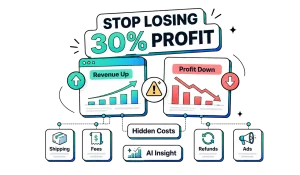
Deep-dive educational approach for paid ad operators who want to protect their margins while scaling.
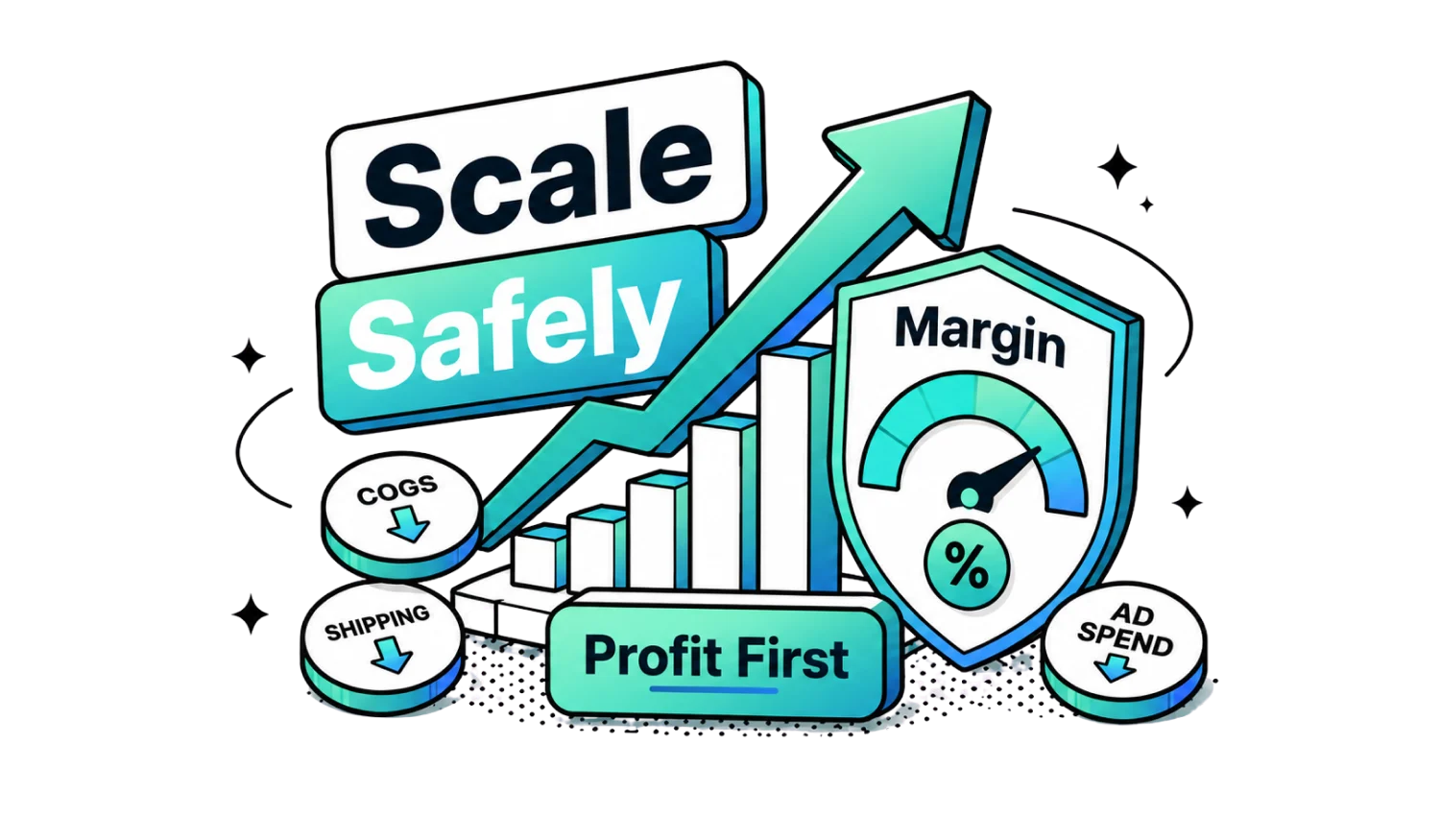
This angle works especially well for merchants who are scaling and aren't aware of the importance of tracking accurate net profit.
Since we're talking about scaling merchants, these aren't newcomers to Shopify or dropshipping. They already have stores that are making money. Their issue is that they do track net profit, but not in the most efficient way (maybe they're still using spreadsheets). This isn't because they don't know TrueProfit is a better option'it's mainly because they don't have a strong enough reason to switch.
With this angle, it's better if you act like an expert and explain why it's critical for merchants to track their net profit accurately, especially when they're scaling. Here's a reference for educational content that can be shared on personal ecom blogs, sites, or newsletters.
Tell them TrueProfit is among the best solutions to eliminate such assumptions. It automatically pulls every hidden fee so they know exactly what's happening and can make data-driven decisions. Then, drop your affiliate link.
Back to How to Promote TrueProfit on Reddit & X›
Here is an example post template you can use to promote this angle:
Did you know that 99% of dropshippers can't scale if they have less than 5% net profit margin?
There's no need to explain the difference between a $10M revenue store and a $10K one'scaling matters to any business. But I've worked with many merchants and found that although they can be extremely talented at finding winning products or designing ad strategies, their mindset around scaling is often too simple.
Many merchants I've worked with said that as long as they see a good signal on their ROAS, they'll start investing more to scale up. Others said they'll look for ways to scale once they have steady traffic and orders for 2–3 months or more. Both approaches have fair points, but they're far from enough.
The main issue is that ROAS, orders, or even revenue are never good benchmarks to decide whether it's time to scale up an ecom store. These metrics only tell you how effective your ads are or how much money you're generating (without factoring in costs). They don't reflect your store's financial health. Knowing your store's financial health is the key to scaling tactics, and the only way to know how healthy your store is is to track your net profit and net profit margin.
Net profit tells you exactly how profitable your business is. And profit margin gives you a basic benchmark to know whether it's time to scale up or reevaluate your numbers. Now back to the earlier question'why isn't 5% enough to scale? Because 5% is a very low profit margin compared to the 10–15% market benchmark. When your margin is too low, hidden costs can eat into your profit without you knowing. As a result, you keep scaling and keep losing money. That's why tracking net profit is so important.
You can set up a spreadsheet system to calculate net profit or use apps to auto-track this in real time. If you go with apps, TrueProfit [place your affiliate link here] is my recommendation. It's very easy to get used to (they have a great onboarding flow) and the data is usually more accurate (compared to Google Sheets).
This angle works because scaling only makes sense when margins stay healthy, and TrueProfit helps merchants check that before spending more. Helping your audience realize that scaling too fast without visibility can destroy their business makes them receptive to a real solution. TrueProfit becomes the safeguard for their ad budget.